
Usage in Humidity: Protecting Your Stash in Monsoon Season
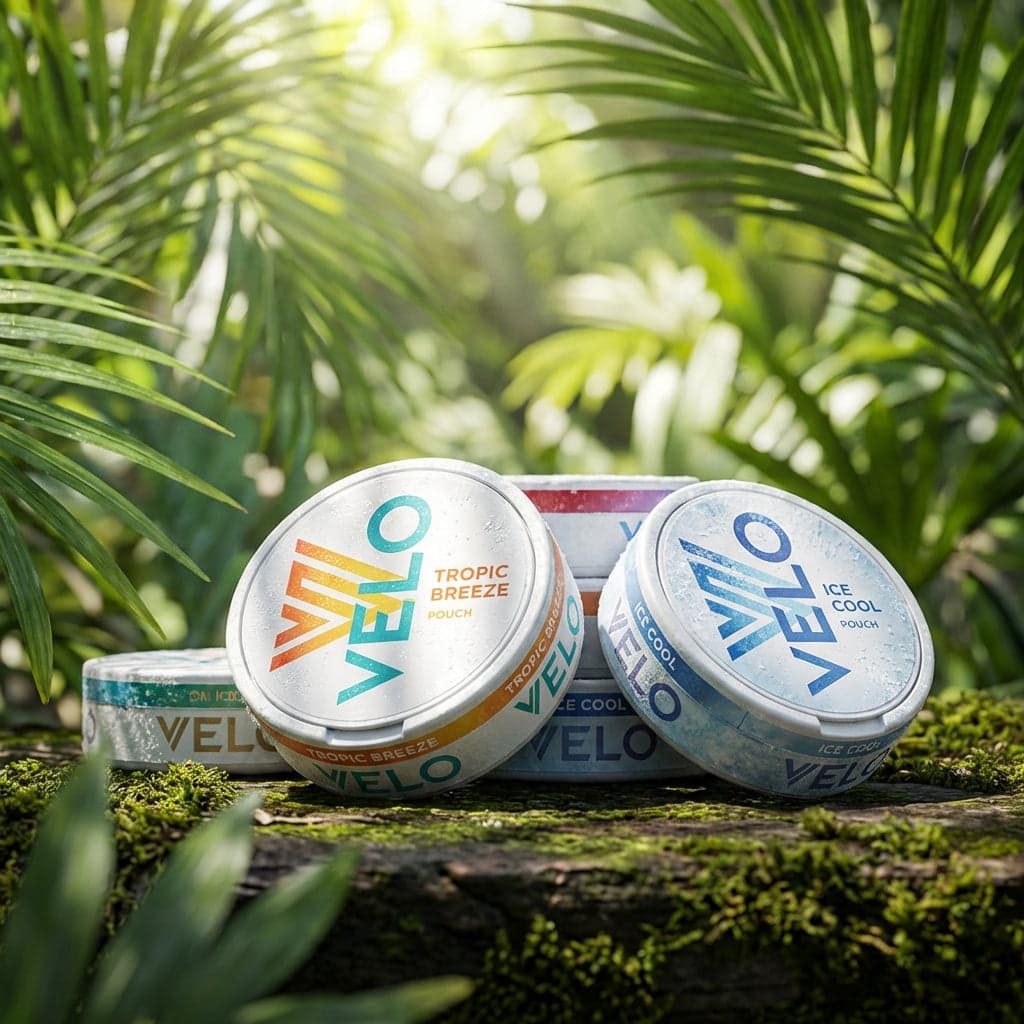
Humid air does not get into a sealed can. It gets in on the can. Ho Chi Minh City air at 32°C and 85% relative humidity has a dew point of about 29°C: any surface cooler than that pulls water straight out of the air within seconds. A can that has spent the afternoon in an air-conditioned office at 24°C is exactly such a surface. So is a can out of the fridge. The beads on the outside are cosmetic; the damage happens when you open it while it is still cold and let the same thing happen to the fleece inside.
Nearly every guide to storing nicotine pouches is written in Sweden or the United States, where a cold can is simply a cold can. In Vietnam it is a condenser for months at a stretch, and that one difference reorders all the usual advice.
What heat and damp actually do
A white pouch is plant fibre, nicotine, flavouring, water and a pH regulator inside a fleece bag. The water and the flavouring are volatile, and both leave when given heat and an escape route. That is why a can kept hot goes thin-tasting and scratchy long before anything else about it changes: the flavour goes first, the moisture goes with it, and what is left is dry fibre that sits badly under the lip.
Ambient humidity does the opposite, and more slowly. While the can is sealed it is close to irrelevant — the can is the moisture barrier. Once it is open, every lift of the lid swaps the air inside for the air in the room. In 85% air, day after day, the fleece takes moisture up rather than losing it, the pouches begin to clump, and flavour compounds migrate out of the fibre into the free liquid instead of into you. That is the soggy, flat, leaks-in-two-minutes can, and it is a specifically tropical way to lose one.
Liquid water is the fast version: a drop of rain under the rim, or a lid closed on condensation, does in an afternoon what a damp room takes a fortnight to do. Size matters too — a mini pouch holds less material than a slim, so the same moisture movement takes a proportionally bigger bite. Of our 49 Mini and 140 Slim products, the minis go first.
The motorbike is the worst place in Vietnam to keep a can
The compartment under the seat is a sealed dark plastic box pointed at the sun, and it runs far hotter than the air around it. Our storage answer on the FAQ page puts the working limit at below about 25°C; a bike parked on the street at two in the afternoon is not within sight of that. It is also the compartment people forget, which is how a can ends up cooking for a week instead of an hour.
A pocket is better and still not good: a can in a front trouser pocket rides at body temperature against a shirt that, in this weather, is damp. If you are out all day, carry it in a bag rather than against you, and take it off the bike when you park rather than when you remember.
Air conditioning, the fridge, and the step that gets left out
Refrigerating stock you are not using this week is sound, and it is what we tell anyone holding more than a couple of cans. The fridge — not the freezer — slows both the drying and the flavour loss. But the European version of that advice is missing a step, and in Vietnam the missing step is the one that matters.
Let a cold can come back to room temperature with the lid shut before you open it. A can at fridge temperature carried into 30°C air at 90% humidity — dew point around 28°C — sits more than twenty degrees below the point where that air gives up its water. Open it there and you pour condensation onto dry fleece, which is the exact damage the fridge was meant to prevent. A minute on the desk costs nothing.
The same physics runs on the daily air-conditioning cycle with no fridge involved. Office at 24°C, street at 33°C: the can is under the dew point the moment you step outside, and the sweat on it is the water that ends up in the fleece if you open it there. Take one out of the bag before you leave the building, not after.
The wet season, and Hanoi's nồm weeks
In the southern wet season the problem is rarely the rain in the abstract. It is that you and your bag get soaked with no warning, and a can rides home in a wet outer pocket. Keep it in a zipped inner pocket or a sealed bag inside the backpack, and dry the rim before you open it — a wet lid puts water onto the top layer of pouches every time it closes.
The North has a second season no imported guide accounts for. During Hanoi's nồm spell, warm humid southerly air arrives over surfaces still cold from the weeks before, and the surfaces sweat: floors, tiled walls, the inside of a ground-floor cupboard. It is the cold-can mechanism at room scale, and it finds a cardboard box on the floor first. Through those weeks store cans high rather than low, away from external walls, in a closed container, and put the surplus in the fridge rather than the cupboard that always smells damp.
The lid compartment, and decanting
Most cans have a compartment in the lid for used pouches. A used pouch is saliva-soaked plant fibre, and a day's worth sealed in a warm lid in this climate is a smell problem by the next morning. Empty it into a bin daily, keep used pouches away from children and animals, and never put one back in with the fresh ones.
Decanting into a nicer can is common here — we stock 12 Kelly White refill cans, bought for exactly that. Two things follow, and neither is a reason not to: you lose the factory seal, and you lose the production date printed on the base of the original. Decant what you will get through in a day or two rather than a week's worth, and keep the original can, with its date, until it is empty.
How to tell a can is past it
- Dried out. The pouches feel stiff and papery, the tingle arrives late and weakly, the flavour is thin from the first minute. Heat did that.
- Waterlogged. The pouches feel slick, they stick to each other, there is free liquid in the can, and the taste is loud for ninety seconds and then gone. Humidity did that.
- Wrong on arrival. If a can looks or smells wrong when it reaches you, do not use it — tell us and we will replace it.
You cannot see nicotine content change, and we do not print a figure for how it changes over time because we do not have one worth printing. Taste is the honest early indicator. The production date is on the base of the can; our shelf-life answer sits with the storage one on the FAQ page.
The real answer is to hold less stock
A humid climate is not solved by a better box. It is solved by having fewer cans in the house. Our catalogue runs to 699 products and we deliver nationwide from inside Vietnam, so a rolling buffer of two or three cans does what a shelf of twelve does, without any of them spending a month in the weather. If you are stocking up anyway — ahead of Tet, or before a stretch upcountry — buy sealed, keep it sealed, refrigerate it, and open one at a time.
Delivery times and provincial coverage are on the shipping page. The full range is at the shop, and organised by maker on the brands page.
Nicotine pouches contain nicotine, which is an addictive substance. Sold to adults aged 18 and over only — not for anyone under 18, anyone who does not already use nicotine, or anyone pregnant or breastfeeding. Everything above is about keeping a product usable, not a health claim; questions about nicotine and your body go to a doctor or pharmacist. Counts checked against our catalogue on 2 August 2026.
Frequently asked questions
A nicotine pouch contains five things: nicotine, plant fibre that gives the pouch its body, water, flavouring, and a sweetener such as sucralose. Many brands add a pH regulator so the nicotine releases at a steady rate. The fleece on the outside is food-grade, the same class of material used in tea bags. Ingredient lists are printed on the base of every can; if a can in your order does not match the product page, tell us and we will replace it.
Put used pouches in the compartment built into most can lids, then empty it into a bin. Do not flush them or drop them on the street. Keep used pouches away from children and pets — they still contain nicotine.
Slim pouches are long and narrow and sit flat along the gum; mini pouches are shorter and thinner, so they are the most discreet; regular pouches are wider and hold more material. All three are used the same way. VinaPouches lists 140 slim products and 49 mini products. Format changes perceived strength: with the same milligram figure, a slim pouch usually feels stronger than a mini because more of it touches the gum. Brands that offer both — VELO, ZYN, KLAR, Kelly White, LOOP, 77 — let you keep a flavour and change only the format.
Keep cans sealed, upright and out of direct sun, below about 25°C. In Vietnamese heat and humidity a fridge keeps pouches moist and flavour sharp for longer. Never leave a can in a parked motorbike or car. A closed motorbike compartment in Da Nang or Ho Chi Minh City in the afternoon can pass 50°C, which dries pouches out and flattens the flavour within days. The fridge — not the freezer — is the right place for stock you are not using this week. Let a chilled can sit for a minute before opening so condensation does not soak the fleece.
An unopened can keeps roughly 12 months from production — check the date printed on the base. Once opened, use it within a few weeks before the pouches dry out and flavour flattens. Refrigeration slows both. An expired pouch is not dangerous, it is just dry and weak — the nicotine degrades slowly and the flavour goes first. If a can arrives with under three months left on the date, tell us and we will replace it.