
Social Etiquette: Using Pouches Respectfully in Vietnam
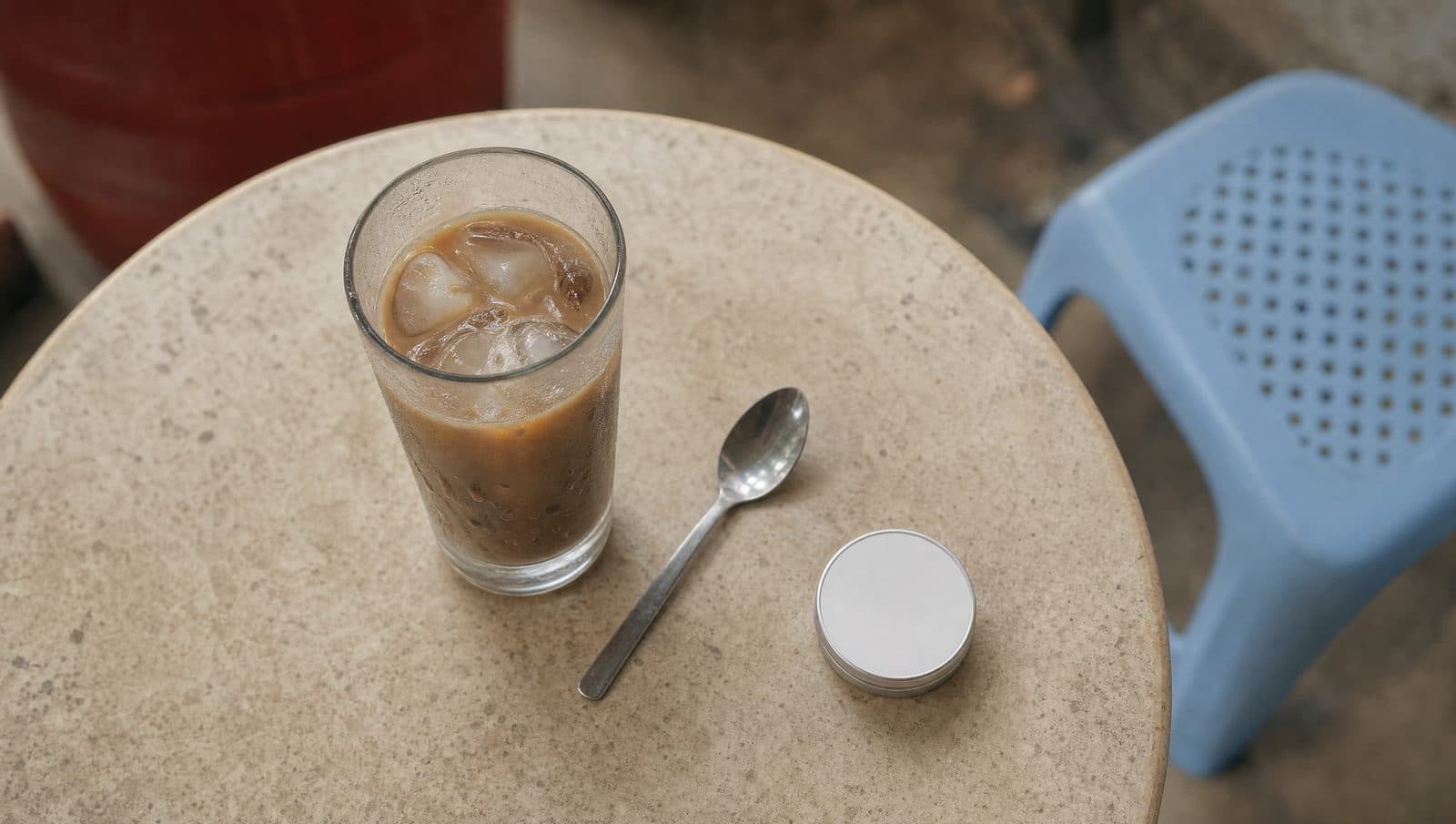
A nicotine pouch produces no smoke, no vapour and no smell, so nobody in the room has to be consulted about it. That deletes the whole question people ask about smoking indoors and leaves a smaller, quieter set: whether to say anything, what to do with the used one when there is no bin, and who you should never hand a can to.
Only the last of those has a firm answer, so it goes first. Do not offer a pouch to anyone who does not already use nicotine. Not to a curious colleague, not to a cousin at a family lunch, not to anyone under 18, and not as a joke. Everything below this is judgement, and Vietnamese social life makes some of those calls differently from what a newcomer expects.
The offering rule, and why it needs saying here
Passing cigarettes around is a real courtesy in Vietnam. They appear at weddings and funerals, on building sites, at the start of a long conversation between men who have just met. Refusing is normal and easy; the offer itself is the gesture. A can of pouches sitting open on a table looks, to everyone at that table, like something that gets passed the same way.
It does not. Nicotine is addictive, and handing one to somebody who has never used nicotine starts something on your recommendation. The fact that a pouch is small, tidy and produces nothing visible is exactly what makes the offer easy to accept and hard to refuse without seeming rude. Keep the can in a pocket or a bag rather than on the table, and if someone asks, answer the question without producing one.
If a cigarette is offered to you, decline it the way anyone declines — a hand over the glass, a smile, "cảm ơn, mình không hút". Do not reach for your can in that moment. Nobody asked, and a counter-offer changes the shape of the exchange.
Whether to mention it at all
You do not owe anyone an announcement. Nothing is released into the air, so there is nothing to warn a room about, and explaining pre-emptively is more conspicuous than the pouch.
Two situations are worth a sentence. The first is a long face-to-face conversation or a meal where someone will register that you have something in your mouth and wonder. The second is being a guest in a home, because you are going to need somewhere to put the used one. In both cases, short and true beats a briefing: "It's a nicotine pouch, it sits under the lip, there's no smoke." In Vietnamese, "đây là túi ngậm nicotine" is understood in most cities and gets you a nod.
Do not offer a demonstration or open the can to show it. That is where explaining slides into offering.
Disposal, which is the actually difficult part
A used pouch still contains nicotine, so this is not a litter question alone.
- Use the lid. Most cans have a compartment in the top for used pouches. It exists for precisely this, and it means you are never stuck holding one.
- Never leave one on a table, a saucer or a plate. In a quán or a café it will be cleared by hand, by someone who did not sign up to touch it.
- Never put one in an ashtray at a table where a child could reach it, and never on the rim of a shared hotpot or barbecue.
- No bin, no problem. Wrap it in a tissue, put it back in the lid, take it home. This is a normal thing to do and nobody notices.
- Not out of a window, not into the street, not down a drain. Someone sweeps that street, usually at night, usually by hand.
- Not down a toilet. The fleece does not break down.
Keep used pouches away from children and pets for the same reason you keep the can away from them.
Setting by setting
- Meals. Take it out before you eat. It shifts when you chew, it gets uncomfortable through a full meal, and it dulls the flavours of whatever arrives at the table. At a shared table where dishes arrive continuously, that means taking it out when you sit down, not halfway through.
- Drinking. Toasts come fast at a Vietnamese table, and refusing every one is its own social problem. If you are drinking, this is not the evening to try a stronger can than usual.
- Cafés. The one setting with no friction at all. A pouch runs roughly 20 to 40 minutes, which is about the length of a cà phê sữa đá and whatever you came to do.
- Offices. Nothing is produced, so there is nothing for a colleague at the next desk to react to. The rule question is separate and is dealt with below. Keep the can in a drawer rather than standing on the desk, where it reads as an invitation.
- Family gatherings and Tết. Timing matters more than the pouch does. Do not be fishing in a bag during a toast to the elders or while incense is being lit at the altar. Deal with it before or after, not during. And never hand one to a younger relative, whatever they say their age is.
- Karaoke. Dark, loud, shared tables, drinks moving around: the exact conditions in which an open can gets picked up by somebody who has never used one. Keep it on you.
- Grab bikes and taxis. Put it in before the helmet goes on or after it comes off, not in between. Never flick a used one into traffic. In a car, take it with you rather than leaving it in a seat pocket.
One practical note that is not about manners: do not leave the can under a motorbike seat. A closed compartment in the Ho Chi Minh City afternoon gets far hotter than the air around it, and the pouches dry out. We wrote about that in keeping cans usable in this climate.
Talking with one in
A pouch sitting front and centre under the upper lip is audible on labial sounds — p, b, m, f, v — and visible as a slight ridge if someone is looking at your face. Moved to the side, above a canine, it is neither. If you are about to present, teach or interview, that is the placement to use, or use a smaller pouch: 48 products in our range carry the mini format, against 140 slim.
Discretion is not a licence
Nothing being detectable is a property of the product. It is not permission, and it does not narrow the set of places with rules. Schools, hospitals, airlines, some offices and plenty of individual venues have policies that cover nicotine products as a category, whether or not anything is exhaled or smelled. Those rules belong to whoever set them, they are not ours to interpret for you, and "nobody would know" is not an answer to them.
So ask, and take the answer. Asking a manager or an HR contact once is a thirty-second conversation. The alternative is a conversation you have after the fact, from a much worse position, about a product most people have never heard of.
The law is a separate question
This page is about manners, and manners are not the legal position. What Vietnamese legislation actually says about oral nicotine pouches, with the dates and the instruments, is set out in our legality explainer, which is written to be re-read after the National Assembly session in October 2026. It is general information rather than legal advice, and so is this sentence.
If you are choosing what to carry into a social setting rather than what to try at home, a milder can and a smaller pouch than your usual one is the practical answer. Our strength guide covers the bands, the full range is at the shop, and common questions are on the FAQ page.
Nicotine pouches contain nicotine, which is an addictive substance. Sold to adults aged 18 and over only — not for anyone under 18, anyone who does not already use nicotine, or anyone pregnant or breastfeeding. Keep new and used pouches away from children and pets. Nothing above is a health claim or legal advice; questions about nicotine and your body go to a doctor or pharmacist. Catalogue counts checked on 2 August 2026.
Frequently asked questions
Take one pouch from the can, place it between your upper lip and gum, and leave it there. Do not chew or swallow. Remove it after 15 to 60 minutes and put it in a bin. Most cans have a compartment in the lid for used pouches. Press it gently into place with your tongue so it sits flat. Most people use the upper lip because it is more comfortable and less visible, but the lower lip works the same way. There is nothing to prepare, charge or light. You can talk and drink normally with a pouch in.
Most people keep a nicotine pouch under the lip for 20 to 40 minutes. The usable range is 15 to 60 minutes: flavour fades first, and nicotine release tails off after about 30 minutes. Take the pouch out sooner if it feels too strong. Manufacturers print an upper limit of 60 minutes on most cans. Extended formats such as LOOP Xtended are built to hold flavour longer, but the nicotine curve is broadly the same. Leaving a spent pouch in past an hour adds nothing.
Yes — you can drink coffee, water or beer with a pouch under your lip. Hot drinks make flavour and nicotine release faster. A full meal usually dislodges the pouch, so most people take it out before eating.
Put used pouches in the compartment built into most can lids, then empty it into a bin. Do not flush them or drop them on the street. Keep used pouches away from children and pets — they still contain nicotine.
Every VinaPouches order ships in a plain box with no brand name, product photo or nicotine wording on the outside. The shipping label shows a neutral sender name. Only you and the courier know what is inside.