
What Are Nicotine Pouches? The Ultimate Vietnam Guide (2026)
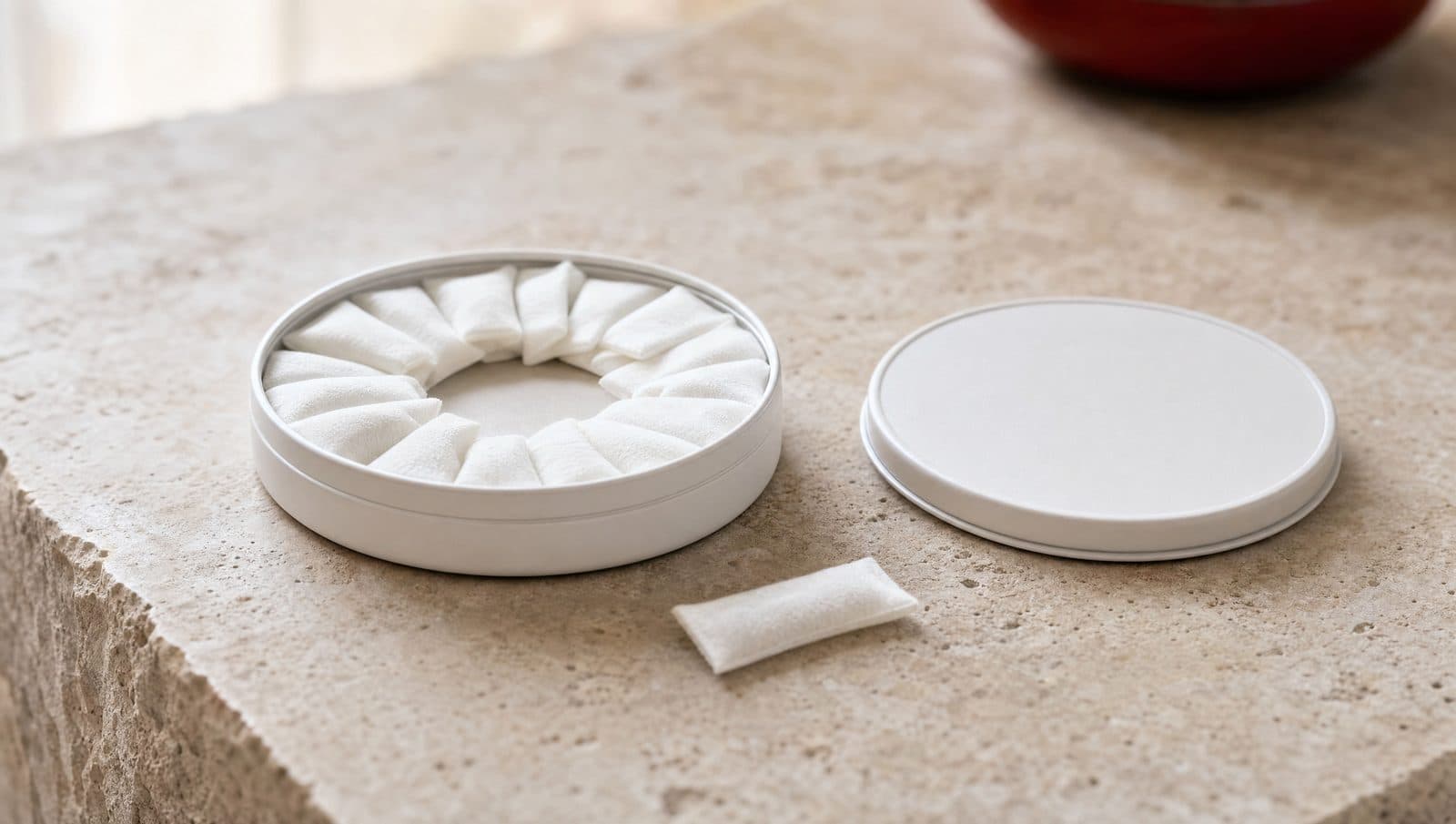
A nicotine pouch is a small white pouch of nicotine, plant fibre, flavouring and water that sits between your upper lip and your gum for fifteen to sixty minutes. Nothing is burnt, nothing is inhaled, there is no tobacco leaf in it and there is no device. You take one out of a tin, put it in, leave it alone, and bin it. That is the entire product.
In Vietnam the category is usually called snus, a Swedish word that is not quite accurate — more on that below. If you have seen the white tins on a table in District 1 and wondered what was in them, this is the plain answer.
What is actually inside one
A tobacco-free pouch contains five things: nicotine, plant fibre that gives the pouch its body, water, flavouring, and a sweetener such as sucralose. Most brands add a pH regulator so the nicotine releases at a steady rate rather than all at once. The fibre is usually eucalyptus or pine cellulose, and the white bag is a food-grade fleece — the same class of material as a tea bag. Ingredient lists are printed on the base of every can.
Tobacco-free does not mean nicotine-free. The nicotine in a white pouch is still nicotine and is still addictive. It is simply not carried on a bed of tobacco.
Snus and a nicotine pouch are not the same thing
Traditional Swedish snus is made from ground tobacco leaf and is brown. A nicotine pouch is white and uses plant fibre where the snus has tobacco. Both go under the lip and are used the same way, which is why the words got mixed up.
Three practical differences follow from the material. White pouches produce far less saliva, which is why no spitting culture ever grew up around them. They release a flavour rather than a tobacco taste. And they do not stain teeth the way brown snus can, because there is no tobacco pigment — a cosmetic difference, not a health one.
Several names here are old Swedish snus houses: Skruf, Lundgrens and Siberia. When one of them appears, it is their white tobacco-free line, never the brown product.
And a pouch is not a vape
These get grouped together because both are newer than cigarettes, but physically they have almost nothing in common.
- An e-cigarette is a device — battery, coil, liquid refill — that heats liquid into an aerosol drawn into the lungs. A heated tobacco product is also a device, heating processed tobacco leaf to the same end.
- An oral nicotine pouch is fleece, nicotine, plant fibre, flavouring, water and a pH regulator. Nicotine crosses the lining of the gum. No battery, no heat, no combustion, no leaf, nothing inhaled and nothing exhaled.
That distinction is not a marketing one: it is the line Vietnamese legislation is drawn along. The longer comparison, including what it means at an airport, is in pouches versus vapes in Vietnam.
Where they sit in Vietnamese law
Vietnamese law names e-cigarettes and heated tobacco. It does not name oral nicotine pouches. What each instrument says, with dates:
- Resolution 173/2024/QH15 was adopted on 30 November 2024 and applies from 1 January 2025. It prohibits the production, trade, import, storage, transport and use of e-cigarettes and heated tobacco products. Oral pouches are not listed in it. Decree 371/2025/ND-CP set the penalties from 31 December 2025 — 3,000,000–5,000,000 VND for an individual using a prohibited product, with confiscation on top.
- The Law on Prevention and Control of Tobacco Harms No. 09/2012/QH13 defines a tobacco product by reference to tobacco material. A tobacco-free pouch contains none.
- The Ministry of Health's draft amendment dated 20 July 2026 adds a category of "other new tobacco products" and does name nicotine pouches in it. Resolution 11/2026/UBTVQH16 moved that draft to the second National Assembly session in October 2026, with the amended law reported as effective 1 July 2027.
That is a description of published texts, not a verdict. We sell pouches, so we are the last people whose reading of this you should rely on: nothing in force names the product either way, and a draft that does name it is on the calendar. Our standing explainer is here, and the policy framework endorsed on 30 July 2026 is covered in the Resolution 160 piece.
The number on the tin, and the trap in it
We hold 699 products from 49 brands. Of those, 362 publish a milligram figure per pouch and 337 do not. Published doses run from 3mg to 25mg. But some tins carry a much larger number — 70mg, 60mg, 50mg — and that number is not the dose. It is milligrams per gram of pouch material, a concentration, and a pouch does not weigh a gram.
Nothing on the outside of the can distinguishes the two. The unit is identical and the per-gram figure is always the larger, which is why the brands that sound strongest are so often the ones quoting a concentration. Thirty-five products here carry a per-gram label — ICEBERG, RAVE, MAGGIE, NOiS and GLICK — and we record no per-pouch dose for any of them, because converting one would mean inventing a pouch weight nobody publishes.
Brands also differ in how much they tell you at all. ZYN publishes a figure on 41 of its 42 products and grades them S1 to S6; VELO has 46 products and publishes a figure on three, preferring words like Strong and MAX. Only one of those lets you compare tins. The full picture is in the strength guide, and the per-gram problem gets its own article in what ICEBERG's 70mg actually means.
Slim, mini, and nothing in between
Format changes how a pouch feels at the same milligram figure, because it changes how much of it touches the gum.
- Slim — long and narrow, lies flat along the gum line. 100 products, and the default shape for most brands.
- Mini — shorter and thinner, the most discreet. 48 products. Mini does not mean weak; some of the strongest tins here are minis.
The older, wider "large" format from Scandinavian oral tobacco is barely represented here — four products. There are also pouches with no nicotine in them at all — flavour and caffeine pouches, in our 0mg range. We make no claim that those help anyone reduce or leave nicotine behind; people buy them for the flavour and the habit.
What using one is actually like
One pouch goes under the upper lip, pressed flat with the tongue. There is a tingle or mild burn within a minute, peaking around five and then fading; saliva builds up and you swallow it normally, without spitting and without ever swallowing the pouch. Most people leave it in for twenty to forty minutes. The full walkthrough, including what to do if you pick a strength that is too much for you, is in our guide to using a pouch.
What is known, and what is not
What is documented: nicotine is addictive, it affects the cardiovascular system, and irritation of the gum where the pouch sits is common with regular use.
What is not settled is the long term. Tobacco-free oral nicotine is roughly a decade old as a product and the long-horizon research does not exist yet, so anyone offering you a confident long-term verdict — in either direction — has gone past the evidence. VinaPouches is a shop, not a medical provider, and questions about nicotine and your own body belong with a doctor or pharmacist.
These are not for anyone under 18, anyone who does not already use nicotine, or anyone pregnant or breastfeeding. Used pouches still contain nicotine and must be kept away from children and pets.
Buying them here
Delivery is nationwide: Hanoi and Ho Chi Minh City in 1–2 business days, Da Nang 2–3, other provinces 3–5, with cash on delivery available. Browse the range at the shop, by maker on the brands page, or read the short answers to everything above in the FAQ.
General information, not legal advice. Nicotine is addictive; sold only to adults aged 18 and over. Catalogue figures checked on 2 August 2026, and where a manufacturer publishes no per-pouch dose we say so rather than estimating one. Legal instruments checked the same day — review the position again after the October 2026 National Assembly session.
Frequently asked questions
A nicotine pouch is a small white pouch of nicotine, plant fibre, flavouring and water that you park between your upper lip and gum for 15 to 60 minutes. No tobacco, no smoke, no vapour, no spitting. Nicotine crosses the gum lining rather than the lungs, so nothing is inhaled and nothing is burnt. A pouch leaves no smell on your hands, clothes or breath, which is why they are used at a desk, on a motorbike, in a meeting or on a flight where smoking is impossible. Pouches come in strengths from 3mg to 25mg and in slim, mini and regular formats.
Swedish snus is made from ground tobacco leaf and is brown; nicotine pouches are white and use plant fibre in place of tobacco. Both sit under the lip. Everything VinaPouches sells is the white, tobacco-free kind. The practical differences: white pouches do not stain teeth the way brown snus can, they release flavour rather than tobacco taste, and they produce far less saliva. Several brands in our catalog — Skruf, Lundgrens, Siberia — are old Swedish snus houses that now also make the white tobacco-free version. When a heritage brand appears here, it is their white line.
No. Every pouch VinaPouches sells is tobacco-free: nicotine, plant-based fibre (usually eucalyptus or pine cellulose), food-grade flavouring, sweetener and water. No tobacco leaf, dust or stem is used at any stage. Tobacco-free does not mean nicotine-free. The nicotine in a white pouch is still nicotine and is still addictive; it is simply not delivered on a bed of tobacco. If you want a product with no nicotine at all, look at the Zero and Energy lines.
A nicotine pouch contains five things: nicotine, plant fibre that gives the pouch its body, water, flavouring, and a sweetener such as sucralose. Many brands add a pH regulator so the nicotine releases at a steady rate. The fleece on the outside is food-grade, the same class of material used in tea bags. Ingredient lists are printed on the base of every can; if a can in your order does not match the product page, tell us and we will replace it.
Take one pouch from the can, place it between your upper lip and gum, and leave it there. Do not chew or swallow. Remove it after 15 to 60 minutes and put it in a bin. Most cans have a compartment in the lid for used pouches. Press it gently into place with your tongue so it sits flat. Most people use the upper lip because it is more comfortable and less visible, but the lower lip works the same way. There is nothing to prepare, charge or light. You can talk and drink normally with a pouch in.